
Trusted by engineering and security teams including:
Understand what the change puts at risk.
A small diff can change who can access data, how a request is authorized, or where untrusted input goes. DryRun investigates the change alongside the surrounding code and retained application context.
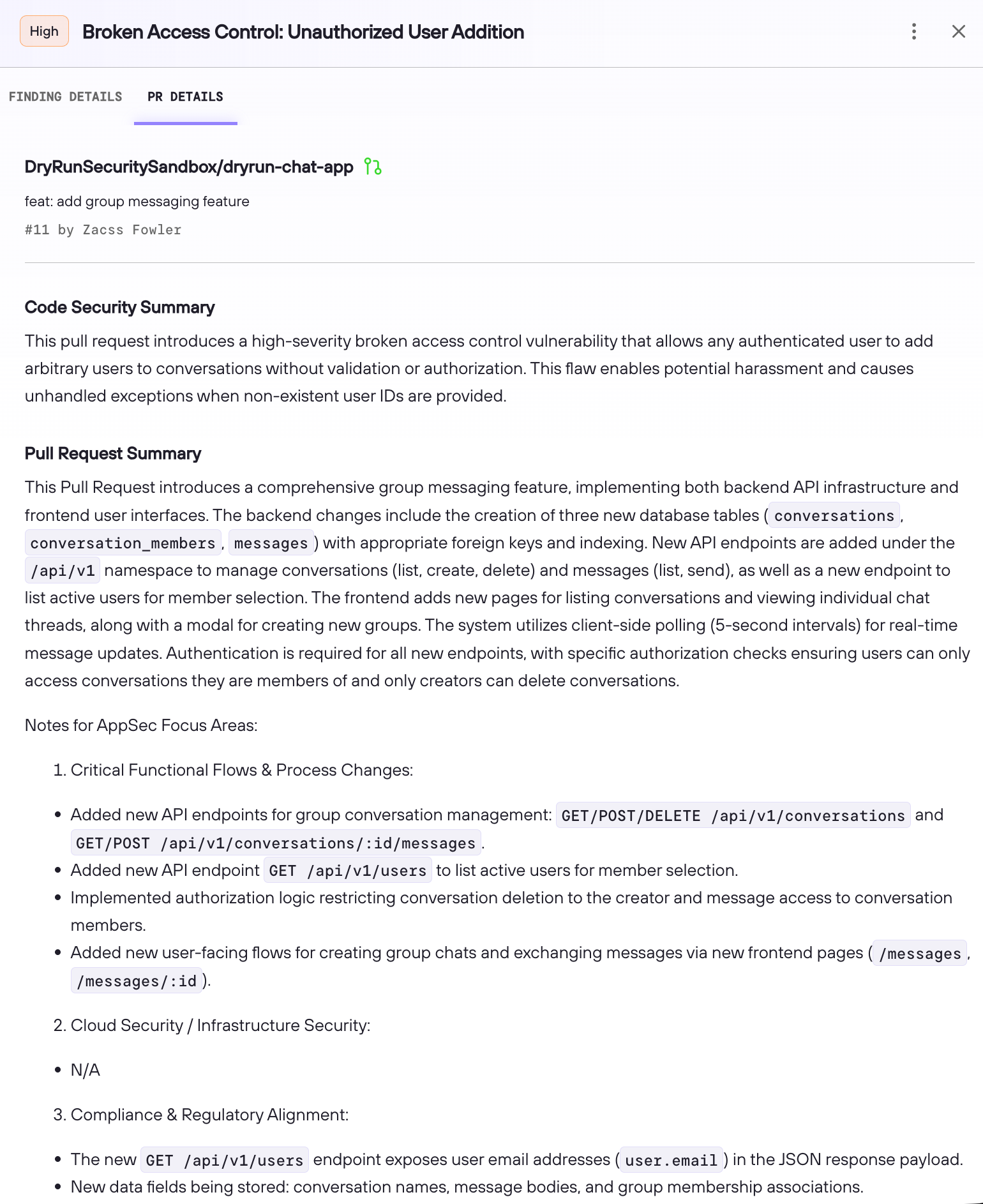
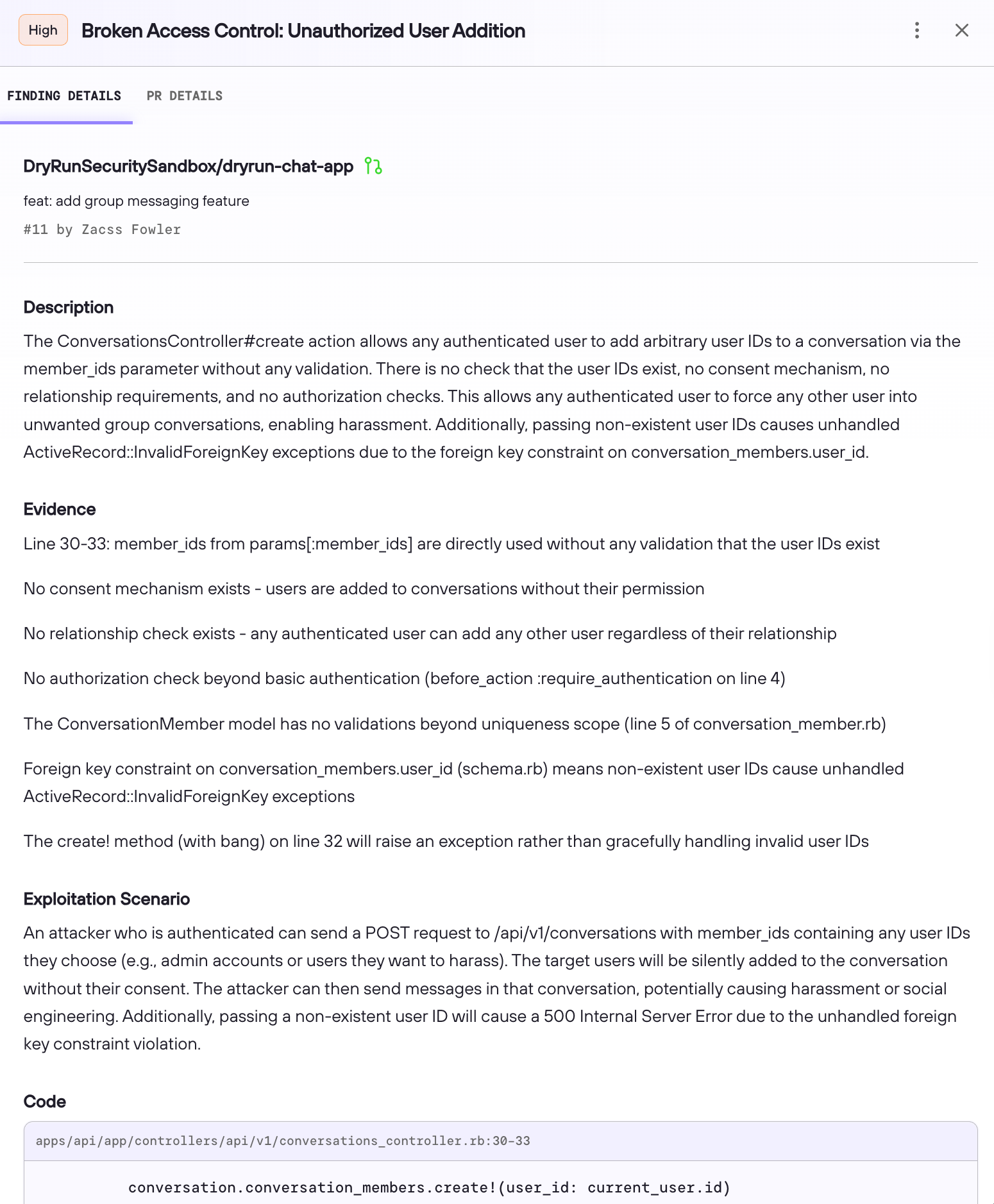
Findings, code references, and fix guidance arrive in GitHub pull requests and GitLab merge requests. In DryRun, inspect the code location, exploitation scenario, and missing control behind a finding.
From proposed change to reviewed repair.
DryRun reviews the change
Opening or updating a PR or MR starts an automated review with static checks, contextual investigation, and your security requirements.
Apply your merge policy
Findings feed the check result. Your configured thresholds and required source-control checks determine what can merge.
Developers and agents repair
A developer or coding agent makes the fix. DryRun independently reviews the updated code.
Choose what risk enters your codebase.
Your team sets the security requirements. DryRun checks the code against them.
Set your blocking threshold
Set the minimum finding severity that fails a DryRun check. Configure GitHub or GitLab to require a passing result before merge.
Check your own requirements
Describe application-specific requirements in natural language, such as checking tenant ownership before reading an invoice. DryRun evaluates them alongside its security analysis.
Fix findings in your coding workflow.
Built-in integrations bring DryRun's findings, security context, and fix guidance into your coding workflow. Flexible MCP, API, and skill support.

DryRun guides the fix
Findings, security context, and repair guidance.
Your developer or agent repairs
The change stays in your coding workflow.
 Codex
 Claude Code
 Cursor
 Windsurf
DryRun reviews the change again
Your configured checks govern what can merge.
With DryRun Security, it feels like we've more than doubled our AppSec team.

Sean Holcroft
Application Security Architect, BrightHR
Your languages. Your workflow.
PR scanning supports all programming languages and frameworks with text-based source code. Connect GitHub, GitHub Enterprise Server, or GitLab and keep security feedback in the review workflow.
See language and framework support, PR scanning coverage, or the language support FAQ.
Review our code safety practices, discuss your setup, or ask about your stack.
Review new code. Investigate existing code.
PR reviews investigate proposed changes. DeepScan investigates the existing repository, including code untouched by the latest change. Both build and use your security context, carrying application knowledge into later investigations.
Explore full-repository DeepScan or see the broader AI-native SAST approach.
See a security review of your code.
Bring a repository and your security requirements. See the findings, inspect the evidence, and put your merge policy to work.